

Foot Pain Helped Me Get Diagnosed With AxSpa!

When we think about foot pain, we often don’t think of it being a common axial spondyloarthritis symptom. For me, this was one the main symptoms that started to put the puzzle pieces of AxSpa symptoms together and eventually led to my diagnosis!
It started several years ago
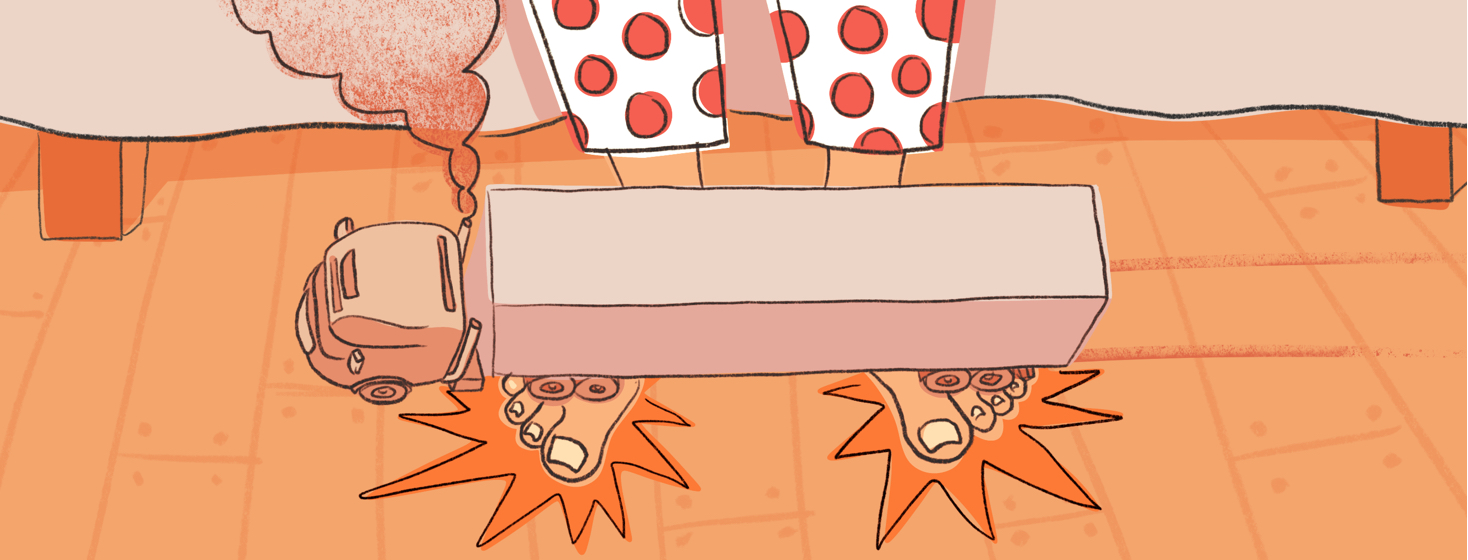
My foot pain started a few years ago. Each morning when I was finally able to sit up in bed and get my feet planted on the floor, I felt INTENSE pain. It truly felt like my feet, especially the right, had broken bones or a trash truck drove over them while I slept.

At times, I limped
I would hobble around the house limping because it was so incredibly painful. Fortunately, after an hour of movement, the pain would improve, just like the stiffness and joint pain in other parts of my body.
But the stiffness in my feet always returned if I sat down for even 10 minutes of rest. The painful cycle would start all over again. To help, I bought a new pair of running shoes and invested in Crocs to use inside instead of floppy slippers. Nothing seemed to make a difference!
To the doctor I went
So I made an appointment with my family doctor to have it checked out. The doctor examined me and sent me for X-rays, and they ended up coming back normal. But along with my other symptoms that I was having at that time, like fatigue, joint pains, and morning stiffness, my doctor decided that it was time for me to see a rheumatologist.
A diagnosis
Fast forward to being diagnosed with AxSpa, and starting my first biologic, Cosentyx. After I was on the medication, I started to feel my symptoms improve, including the intense foot pain. Now, with the help of the right biologic, my foot pain and axial spondyloarthritis symptoms are well-managed!
I haven't seen many people discussing foot pain as a common symptom of axial spondyloarthritis. I wanted to share my story since foot pain was a huge contributor to seeing my doctor!
Has anybody experienced foot pain? Where in your foot does the pain happen? Have you ever brought it up to your rheumatologist or family doctor?
Join the conversation